Does landlord insurance cover damage by tenants?


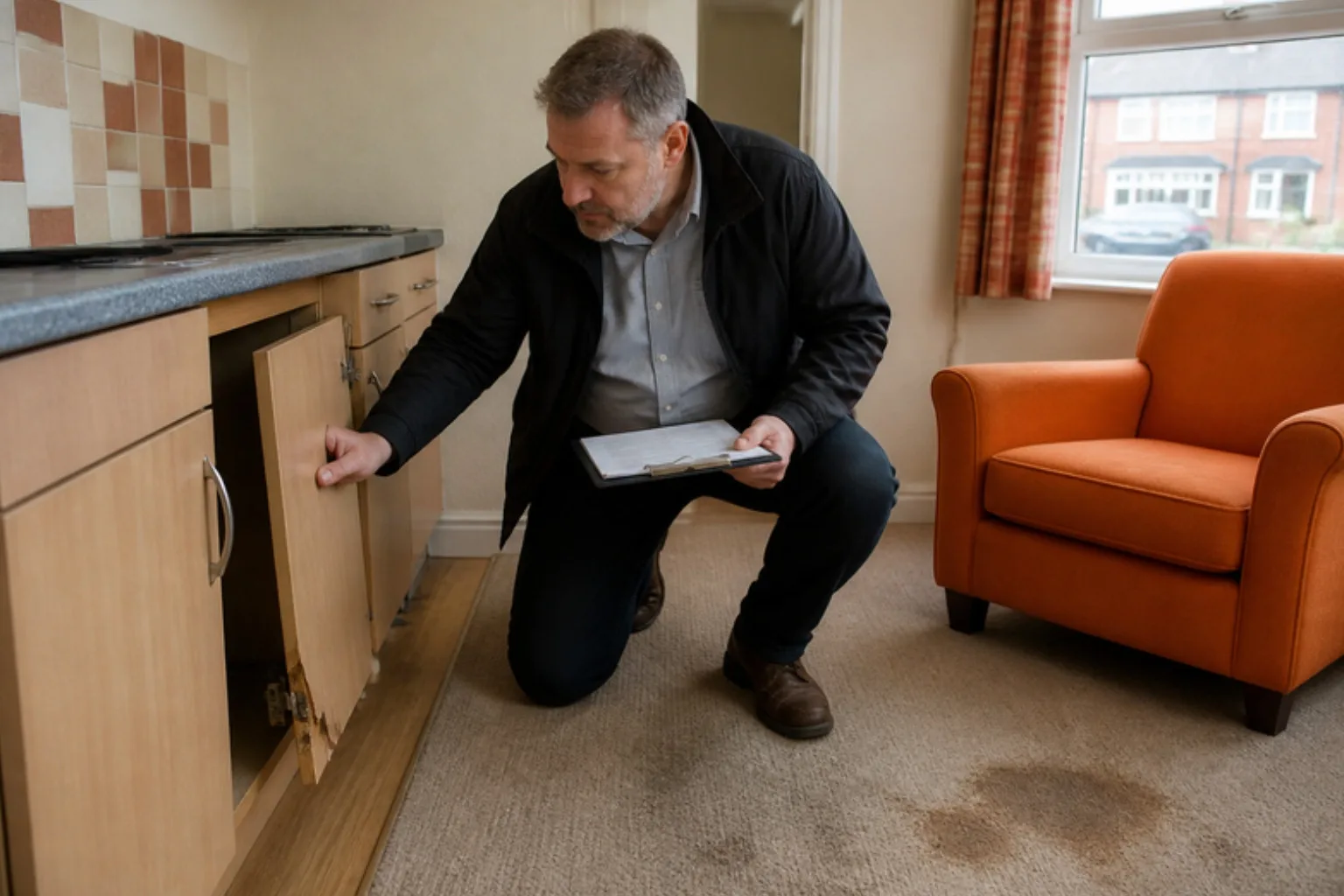
Sometimes. It depends on whether the damage was an accident, done on purpose or just the result of normal use. Many landlord policies treat accidental and malicious damage by tenants as optional extras, and wear and tear is almost always left out.
The deposit is your first line of defence. GOV.UK says tenants get their deposit back if they do not damage the property (GOV.UK). Insurance tends to matter for bigger bills that the deposit cannot cover.
Which kinds of tenant damage can a landlord policy pay for?
Accidental and deliberate damage can both be covered, but usually only if your policy includes that section. The table shows how insurers tend to treat each type. Wording varies, so check your own schedule.
| Type of damage | Example | How policies often treat it | Other ways to recover the cost |
|---|---|---|---|
| Accidental damage by a tenant | A dropped iron scorches the worktop | Optional extra on many policies | Deposit deduction |
| Malicious damage by a tenant or their guests | Doors kicked in after a row about notice | Sometimes included, often an extra, may carry its own limit or excess | Deposit, then court |
| Malicious damage by intruders | A broken-in empty flat sprayed with graffiti | Often part of buildings or contents cover | None directly; report it to the police, as the claim may need a crime reference |
| Wear and tear | Faded paint, a carpet thinned along the hallway | Excluded | None: it is a running cost of letting |
| Neglect or poor cleaning | A cooker left caked in grease | Usually excluded | Deposit deduction |
| Damage to the tenant’s own things | A tenant’s TV knocked off its stand | Not covered by your policy | The tenant’s contents insurance |
Your tenant’s belongings are their own responsibility. They can insure them with tenants contents insurance.
What counts as malicious damage rather than an accident?
Malicious damage is harm done on purpose, or with reckless disregard for the property. That is close to the legal test for criminal damage in England and Wales. The Criminal Damage Act 1971 makes it an offence to destroy or damage someone else’s property without lawful excuse, intending to or being reckless about it (legislation.gov.uk).
Accidental damage is sudden and unintended, like a bath that overflows when a tenant falls asleep. Wear and tear is the slow decline you expect from people living in a home.
The line can be blurry: a hole in a plasterboard wall might be a trip or a punch. Dated photos and a signed inventory help the insurer decide.
Should you use the tenancy deposit or claim on insurance?
Start with the deposit for smaller jobs, and turn to insurance when the repair bill is larger than the deposit plus your excess. In England and Wales, GOV.UK says you must put the deposit in a government-backed scheme within 30 days of getting it (GOV.UK).
- If you agree the deductions. The deposit goes back to the tenant within 10 days of you both agreeing how much they get.
- If you disagree. The money stays protected in the scheme until the dispute is settled.
- If the deposit falls short. A landlord could take the tenant to court for the rest. The government’s guide to the Renters’ Rights Act says this about pet damage (GOV.UK).
Scotland and Northern Ireland run separate deposit schemes, so check the rules where your property is.
Who pays when a tenant’s friends or family cause the damage?
The tenant does. GOV.UK tells tenants they are responsible for paying to put right damage caused by their family and friends (GOV.UK). The same page says a tenant who damages another tenant’s flat, for example through an overflowing bath, pays for those repairs too.
Your own repair duties do not go away, though. GOV.UK lists the structure, exterior, sanitary fittings, heating, hot water, gas and wiring as things the landlord is always responsible for repairing. In a shared house, damage in communal areas can be hard to pin on one person, so check how an HMO landlord policy handles it.
What can stop a tenant damage claim being paid?
Refused claims often come down to a policy condition that was not met. Check these in your wording:
- Empty periods. Many policies cut back cover once a property has stood empty for a set number of days. Damage found long after a tenant left may fall into that gap.
- Tenant type. If you now let to sharers, students or short-stay guests and have not told the insurer, the cover may not match the let.
- Inspections. Some policies ask you to inspect at set intervals and keep records.
- Evidence. Without a check-in inventory and photos, it is hard to show the damage is new.
- Illegal use. Check how your policy treats damage from a property being used for crime, such as drug production.
- Late reporting. Insurers usually want to hear about damage promptly, and some ask for a police crime reference for deliberate damage.
Letting to students? Our student landlord insurance page covers summer gaps and group tenancies.
Can you evict a tenant who damages the property?
Yes, in England there are specific grounds for it, though you still have to use the court process. The government guide lists Ground 13 for when the tenant has caused the condition of the property to deteriorate, and Ground 15 for damage to furniture. Both need 2 weeks’ notice (GOV.UK).
Some landlord policies include legal expenses cover for possession claims, so check yours before you start.
Worked example: a furnished flat left damaged at the end of a tenancy
Hannah lets a furnished two-bed flat in Leeds. At check-out she finds a bedroom door kicked off its hinges, a slashed sofa, a wine-stained carpet and scuffed paint in the hall.
She sorts the damage into groups. The scuffed paint after a three-year tenancy is wear and tear, so she pays for it herself. The carpet stain looks accidental, and the cleaning bill is far less than her excess, so she asks the deposit scheme for a deduction.
The door and sofa look deliberate. Hannah reports them to the police and gets a crime reference. Her policy includes malicious damage by tenants, so she claims, sending her check-in inventory, dated photos and repair quotes.
The repairs will leave the flat empty for longer than her policy allows, so she asks her insurer and looks at unoccupied property insurance.
Checklist to protect yourself against tenant damage
- Read the accidental damage and malicious damage sections of your policy, and note any separate limit or excess
- Take a deposit and protect it in a government-backed scheme within 30 days
- Make a detailed inventory with dated photos at check-in, signed by the tenant
- Inspect at the intervals your policy asks for, giving the tenant proper notice
- Tell your insurer if the tenant type or the number of households changes
- Check how many days the property can stand empty before cover is reduced
Does landlord insurance cover malicious damage by tenants?
It can, but not every policy includes it. Some insurers build it in and others sell it as an extra, sometimes with its own limit or excess. Check your policy schedule for a section that names damage by tenants.
Does landlord insurance cover accidental damage by tenants?
Only if you have accidental damage cover, which is often an optional extra on landlord policies. Without it, small accidents usually go through the tenancy deposit instead.
Is wear and tear covered by landlord insurance?
No. Wear and tear is the gradual decline you expect from people living in a home, such as faded paint or worn carpets. Insurers treat it as a normal running cost of letting, not an insured event.
Does landlord insurance cover damage caused by a tenant’s pet?
Many policies exclude or limit damage caused by pets, so check the wording. The government guide to the Renters’ Rights Act says the deposit can be used for pet damage. If the deposit does not cover the cost, a landlord could go to court.
Can I keep the deposit for damage instead of claiming?
You can ask to deduct the cost from the deposit, but you cannot simply keep it. If the tenant disagrees, GOV.UK says the money stays protected in the scheme until the dispute is settled.
Do I need to report malicious damage to the police?
It is a good idea, and some policies ask for a crime reference before a malicious damage claim is considered. Report it as soon as you find it and keep the reference with your claim.
Will claiming for tenant damage raise my premium?
It may. Insurers can take your claims record into account at renewal. That is one reason many landlords use the deposit for small repairs and keep insurance for larger losses.
What if my insurer turns down my tenant damage claim?
Complain to the insurer first. The Financial Ombudsman Service says a business has up to 8 weeks to consider most complaints. After its final response, you have 6 months to take the complaint to the ombudsman.
What to do next
If your current cover leaves out damage by tenants, compare policies that include it. Tiger.co.uk lets you compare landlord insurance quotes from UK providers with one short form.
Cover, limits and excesses vary, so read the policy wording before you buy. For policy types and extras, see the landlord insurance hub or our buy-to-let insurance page on Tiger.co.uk. Letting to a relative? Read our guide on landlord cover when you rent to family.
Fact-checked by Ian Wilson, Managing Director at Tiger.co.uk. 20+ years in price comparison; MEng, Queen’s University Belfast.