Nearly two-thirds admit to illegal parking


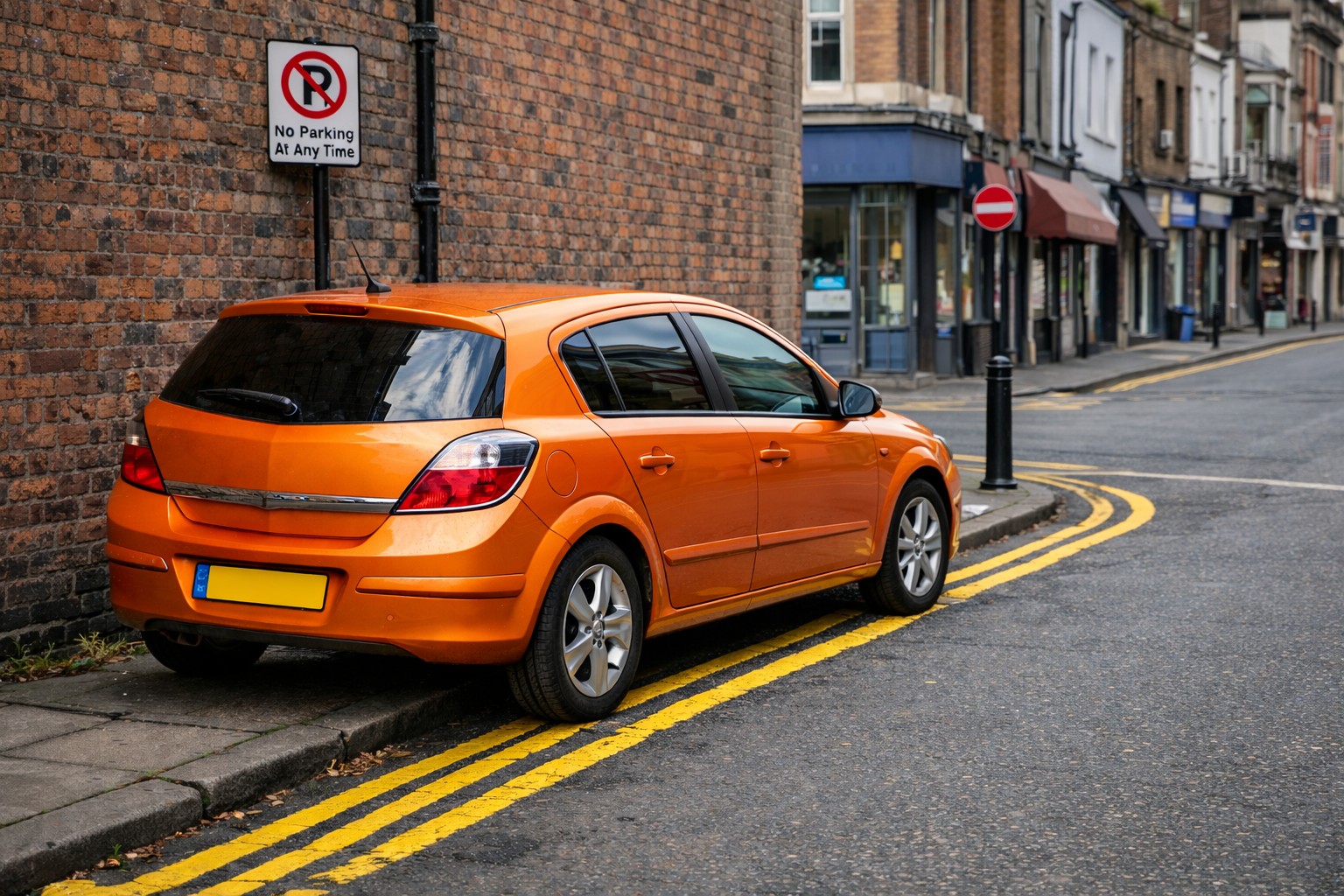
New data suggests British drivers are treating restricted spaces as short-term convenience zones despite clear rules and regulations.
Motor insurance experts at Tiger.co.uk have exposed some of the UK’s worst parking habits, with 60% admitting to parking illegally and putting themselves at risk of financial penalties.
A recent survey revealed 19% of motorists admitted to parking on double yellow lines, despite knowledge that doing so is illegal and could result in a Penalty Charge Notice – which can vary from £70 to £160 depending on the area.
Worryingly that was not the only parking violation, 10% of those surveyed also said they have parked in a parent and child bay when in a rush. Around 12% of respondents also admitted to parking in a loading bay, with 7% saying they have parked in a resident-only area and 5% in disabled only spaces.
The misuse of these parking spots, not only has financial implications for the driver, but also directly reduces accessibility for vulnerable community members, such as disabled people and parents who need the additional room for safely unloading children, car seats and prams.
Parking on a double yellow line can block roads, inhibit emergency vehicles and cause issues for pedestrians other road users, while parking in loading bays can cause disruption for businesses.
Interestingly, 41% of people said they would challenge someone parked in a restricted space they don’t appear entitled to.
The results suggest motorists are seemingly undeterred by the financial consequences, despite many Britons currently struggling with the surging cost of living.
London and Scotland already have pavement parking bans in place, with fines of up to £160* and £100** respectively. Councils across England are to be given more extensive powers later this year to fine motorists who park causing obstructions.
Ian Wilson, Managing Director and car insurance expert at Tiger.co.uk said: “It’s worrying to see drivers disregard parking laws, especially those affecting disabled people and young families.
“Double yellow lines, loading bays, disabled spots and parent and child spaces all exist for important safety and access reasons.
“Ignoring restricted area rules creates knock-on effects for other road users, and can also result in hefty charges or even vehicle damage.
“Parking the vehicle in an inappropriate place, such as on a double yellow line, increases the risk of damage. As repair costs continue to increase, drivers may turn to their car insurance to cover the bill, potentially losing their no claims bonus and increasing premiums going forward.
“It’s important that drivers are aware of the rules and seek to park in a safe and appropriate spot, to help ensure other road users aren’t restricted or at risk by their actions and that they protect themselves from the financial impacts.”
Tiger.co.uk gives customers access to a quick and easy-to-use platform to search for savings on all sorts of motoring products, such as van, fleet and car insurance.
References:
| Parking Violation | % Admit to Using | Legally Enforceable on Public Highway? | Legal Basis |
| Double yellow lines | 19% | Yes | Waiting restriction under Traffic Regulation Order (TRO) |
| Loading bay | 12% | Yes (if not loading / outside times) | TRO-designated loading place |
| Parent & child space | 10% | Usually no (private land) | Contract law in private car parks |
| Resident-only bay | 7% | Yes | Permit parking under TRO |
| Over someone’s dropped curb | 6% | Yes | Specific contravention: parking adjacent to dropped footway |
| Bus stop | 6% | Yes | Bus stop clearway restriction under TRO |
| Disabled area | 5% | Yes | Designated disabled bay under TRO |
| Over a cycle lane | 3% | Yes (if mandatory lane – solid line) | Mandatory cycle lane restriction |
| On someone else’s driveway | 2% | It can depend | Civil trespass OR dropped kerb contravention |
| EV charger spot | 2% | Yes (where covered by TRO) | Designated EV charging place |
| Not applicable | 27% | — | — |
Breaches of statutory parking restrictions, on-street parking on public highways in England and Wales.
SURVEY – Tiger’s findings are based on a randomised survey of 1,000 respondents across the UK during January 2026, which represents a margin of error of approximately 5% at a 95% confidence level.
References:
*https://www.westminster.gov.uk/sites/default/files/media/documents/parking_fees_charges_v20_oct25.pdf?utm
**https://roadsafety.scot/road-user-advice/pavement-parking/
Table sources:
Traffic Management Act 2004 – https://www.legislation.gov.uk/ukpga/2004/18/contents
Traffic Management Act 2004, Section 86 (Dropped Footways) – https://www.legislation.gov.uk/ukpga/2004/18/section/86
Traffic Signs Regulations and General Directions 2016 – https://www.legislation.gov.uk/uksi/2016/362/contents
The Highway Code (GOV.UK) – https://www.gov.uk/guidance/the-highway-code
Waiting and Parking Rules (Highway Code Rules 238–252) – https://www.gov.uk/guidance/the-highway-code/waiting-and-parking-238-to-252
Civil Enforcement of Parking Contraventions – Statutory Guidance – https://www.gov.uk/government/publications/civil-enforcement-of-parking-contraventions
Blue Badge Scheme Local Authority Guidance – https://www.gov.uk/government/publications/the-blue-badge-scheme-local-authority-guidance-england;
Road Traffic Regulation Act 1984- https://www.legislation.gov.uk/ukpga/1984/27/contents
This article is intended as generic information only and is not intended to apply to anybody’s specific circumstances, demands or needs. The views expressed are not intended to provide any financial service or to give any recommendation or advice. Products and services are only mentioned for illustrative rather than promotional purposes.