Does buildings insurance cover damp?


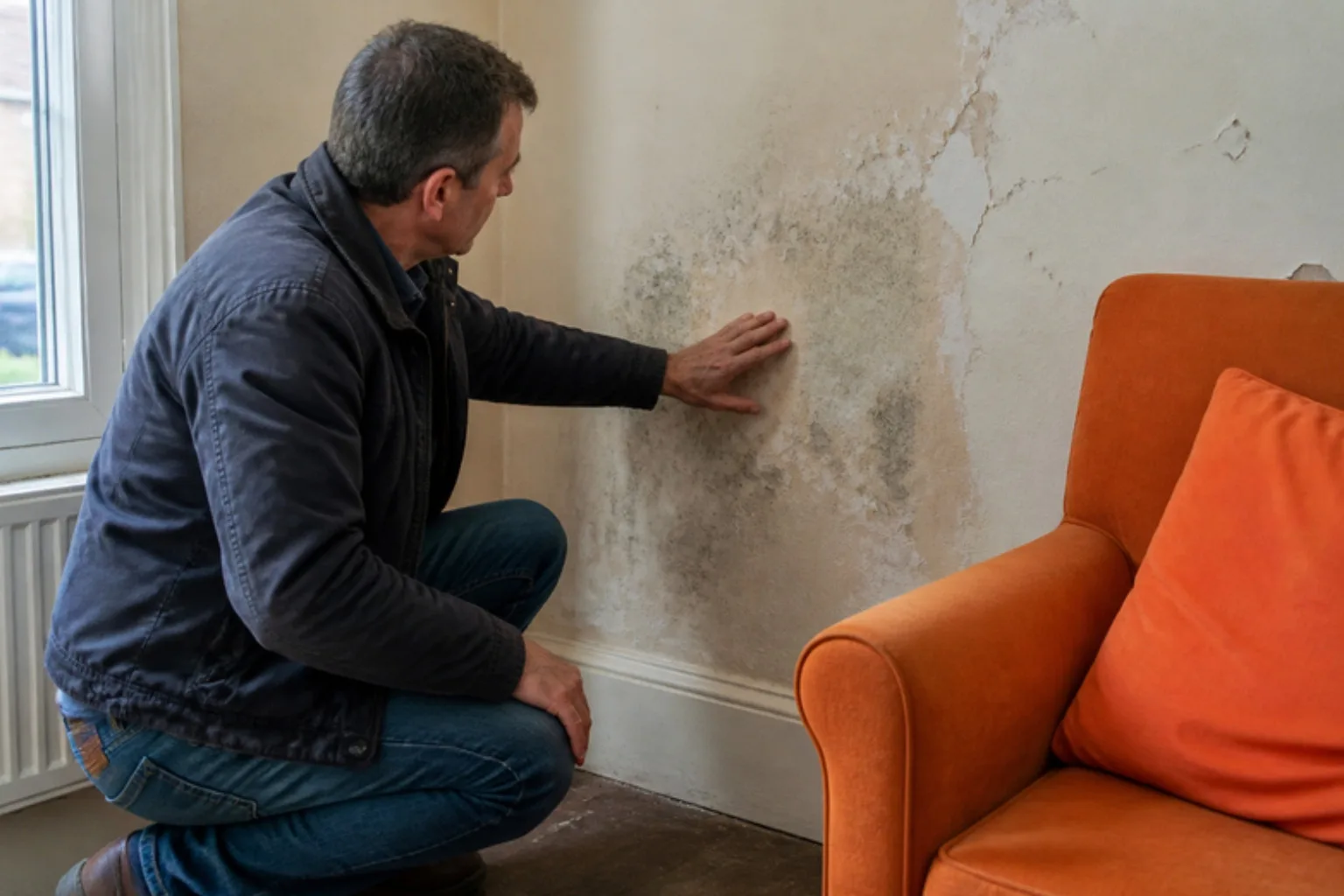
Usually not for the damp itself. Standard home policies pay out for listed events such as fire, flood or theft, and they often exclude damage that builds up gradually (Financial Ombudsman Service). Most damp falls into that gradual category.
Where damp is the result of a sudden insured event, such as a burst pipe or storm damage to your roof, the damage it causes may be covered. The cost of fixing the underlying problem, like a failed damp-proof course, normally stays with you as the homeowner.
Which types of damp might an insurer pay for?
Only damp linked to a sudden, insured cause is likely to be considered. GOV.UK guidance splits household damp into four types, and each one sits differently against a typical policy (GOV.UK damp and mould guidance).
| Type of damp | What causes it (GOV.UK) | Usual position on a standard buildings policy |
|---|---|---|
| Condensation | Moisture made inside the home settles on cold surfaces. GOV.UK calls it the most common form of damp. | Rarely covered. It builds up over time and is seen as a ventilation or upkeep issue. |
| Penetrating damp | Water gets in from outside through defects in walls, roofs, windows or floors. | Covered only if a one-off insured event, such as a storm, caused the defect. Slow decay is normally excluded. |
| Rising damp | Ground moisture rises through walls and floors, often because of a faulty damp-proof course. | Rarely covered. It is treated as gradual damage or a maintenance problem. |
| Traumatic damp | Leaks from pipes, overflowing baths, burst pipes, faulty tanks or flooding. | Often the strongest case, under escape of water or flood, if the event was sudden and you acted quickly. |
Policies vary, so your own policy wording decides what is included.
Why is most damp excluded from home insurance?
Because insurance is built around sudden events, not slow decline. The Financial Ombudsman Service notes that mould is not usually something that suddenly appears. Policy exclusions often cover damage caused gradually, sometimes called a “gradually operating cause” (FOS).
Many policies also exclude wear and tear, and some name rot as a separate exclusion. The ombudsman treats a rot exclusion in the same way as a gradual damage one, since rot usually develops slowly.
When a gradual damage refusal may not be fair
An insurer that relies on an exclusion has to show it applies. The ombudsman may ask an insurer to pay if you could not reasonably have known the damage was happening. You would also need to have claimed, or acted, as soon as you could reasonably have known.
That protection has limits. It does not usually apply to pure wear and tear, because everything wears out eventually.
Why rising damp claims are usually refused
Rising damp builds up slowly, usually from a missing or failed damp-proof course. Insurers tend to treat it as a maintenance cost rather than an insured event.
It is also easy to get wrong. GOV.UK says rising damp is usually found in older properties, is often misdiagnosed, and is best confirmed by chemical testing (GOV.UK). Get a proper diagnosis before paying for treatment, as the real cause may be a leak you can fix more cheaply. If unsure about cover, ask your insurer before work starts.
Does buildings cover pay for damp after a leak, flood or storm?
It can, because these are the sudden events a policy is designed for. A burst pipe usually falls under escape of water, and floodwater under the flood section, so drying out, replastering and redecorating may be included, less your excess.
Underground pipe cover is narrower, and usually pays for the pipe itself. The ombudsman says damage beyond the pipe may fall under other sections, such as escape of water or flood (FOS).
Storm claims depend on the cause. The question is whether storm conditions were the main cause, or whether the damage might have happened anyway. The ombudsman is unlikely to accept damage blamed on general bad weather over time (FOS).
Does accidental damage cover help?
Not much, for damp. Accidental damage is usually an optional extra, and it generally excludes wear and tear, gradual deterioration with age and defective workmanship (FOS).
Who pays for damp if you rent your home?
Your landlord, in most cases. GOV.UK says landlords are always responsible for repairs to the structure and exterior (GOV.UK). Contact your landlord about repairs or mould, and do it straight away if the problem could affect your health.
That GOV.UK guidance covers England. Scotland and Northern Ireland have their own housing standards and procedures.
If repairs are not done, the environmental health team at your local council can help. Your own tenants insurance covers your belongings, not the building, and gradual damp damage is commonly excluded there too. Landlords can read about landlord insurance, which covers the building they let out.
A worked example: two damp problems in one house
Sam owns a Victorian terrace. Over the winter he spots tide marks and flaking plaster along the bottom of the lounge wall. A damp specialist carries out a chemical test and confirms rising damp from a failed damp-proof course.
Sam asks his insurer, who explains the policy excludes gradual damage and wear and tear. He pays for the new damp-proof course and replastering himself.
A few months later a pipe under the bathroom floor splits. Water soaks through to the kitchen ceiling below within hours. Sam turns off the stopcock, takes photos and calls his insurer the same day. This time the claim falls under escape of water, so the drying out and ceiling repair are considered, less his excess.
Same house, very different outcomes. The cause and how suddenly it happened decided each one, not the damp itself.
What should you do if you find damp?
Find the cause first, then check your cover before any work starts. This checklist keeps your options open:
- Stop the source: turn off the water for a leak, and clear blocked gutters or downpipes.
- Get a proper diagnosis: use a qualified surveyor or damp specialist, as rising damp is often misdiagnosed.
- Take photos and keep reports: the ombudsman says expert reports and photos matter if a claim is disputed.
- Read the policy wording: look at the insured events, plus any gradual damage, rot and wear and tear exclusions.
- Tell your insurer early: many policies ask you to report a problem quickly and wait for an inspection before repairs.
- Watch for cracks: damp alongside new cracking can point to ground movement, which is covered differently. See subsidence cover.
- Answer renewal questions honestly: if an insurer asks about damp or repairs, you must take reasonable care not to give a wrong answer.
That last duty comes from the Consumer Insurance (Disclosure and Representations) Act 2012, section 2.
Questions people ask about damp and home insurance
Does home insurance cover damp?
Not usually. Home insurance covers listed events like fire, flood and escape of water. Damp that builds up gradually is normally excluded, but damage from a sudden insured event may be covered.
Is rising damp covered by home insurance?
Rarely. Insurers usually class it as gradual damage or a maintenance problem, so treatment and replastering fall to the homeowner. Check your policy wording, and get a proper diagnosis first.
Can I claim for damp proofing on my insurance?
Almost never. Installing or repairing a damp-proof course is treated as maintenance of the building, so the cost normally falls on the homeowner rather than the insurer.
Is mould covered by buildings insurance?
Usually not when it grows slowly from condensation or long-term damp. The Financial Ombudsman Service notes mould is not usually sudden. Mould after a sudden insured leak may be looked at as part of that claim.
Will my insurer pay for damp after a burst pipe?
Often, yes. A burst pipe is usually an escape of water event, so resulting damage such as wet plaster, flooring and redecoration may be covered, less your excess. The pipe repair itself may not be.
Does contents insurance cover belongings damaged by damp?
Only in limited cases. Contents policies also work on insured events, so items ruined by a sudden leak may be covered, while things spoiled slowly by condensation or mould usually are not.
Who is responsible for damp in a rented home?
Usually the landlord, who is always responsible for repairs to the structure and exterior in England (GOV.UK). Contact them about damp or mould, straight away if it could affect your health, and contact the council if nothing happens.
Do I have to tell my insurer about damp?
If the insurer asks, yes. Under the Consumer Insurance (Disclosure and Representations) Act 2012 you must take reasonable care not to give a wrong answer when you buy or change a policy.
What can I do if my damp claim is turned down?
Complain to the insurer first. They usually have up to 8 weeks to reply. If you are unhappy with the final response, you can take it to the Financial Ombudsman Service within 6 months, free of charge.
What to do next
If your claim is declined and you disagree, follow the insurer’s complaints process and keep every report and photo. The Financial Ombudsman Service explains the steps and time limits.
When your renewal comes round, compare what each policy says about escape of water, storm and gradual damage, not just the price. Tiger.co.uk lets you compare home insurance quotes from UK insurers in one go.
You can read more about buildings insurance, contents cover and home emergency cover, which can help with call-outs for sudden leaks, on Tiger.co.uk. Cover and prices vary between insurers, so read the policy wording before you buy.
Fact-checked by Ian Wilson, Managing Director at Tiger.co.uk. 20+ years in price comparison; MEng, Queen’s University Belfast.