Is buildings insurance the same as home insurance?


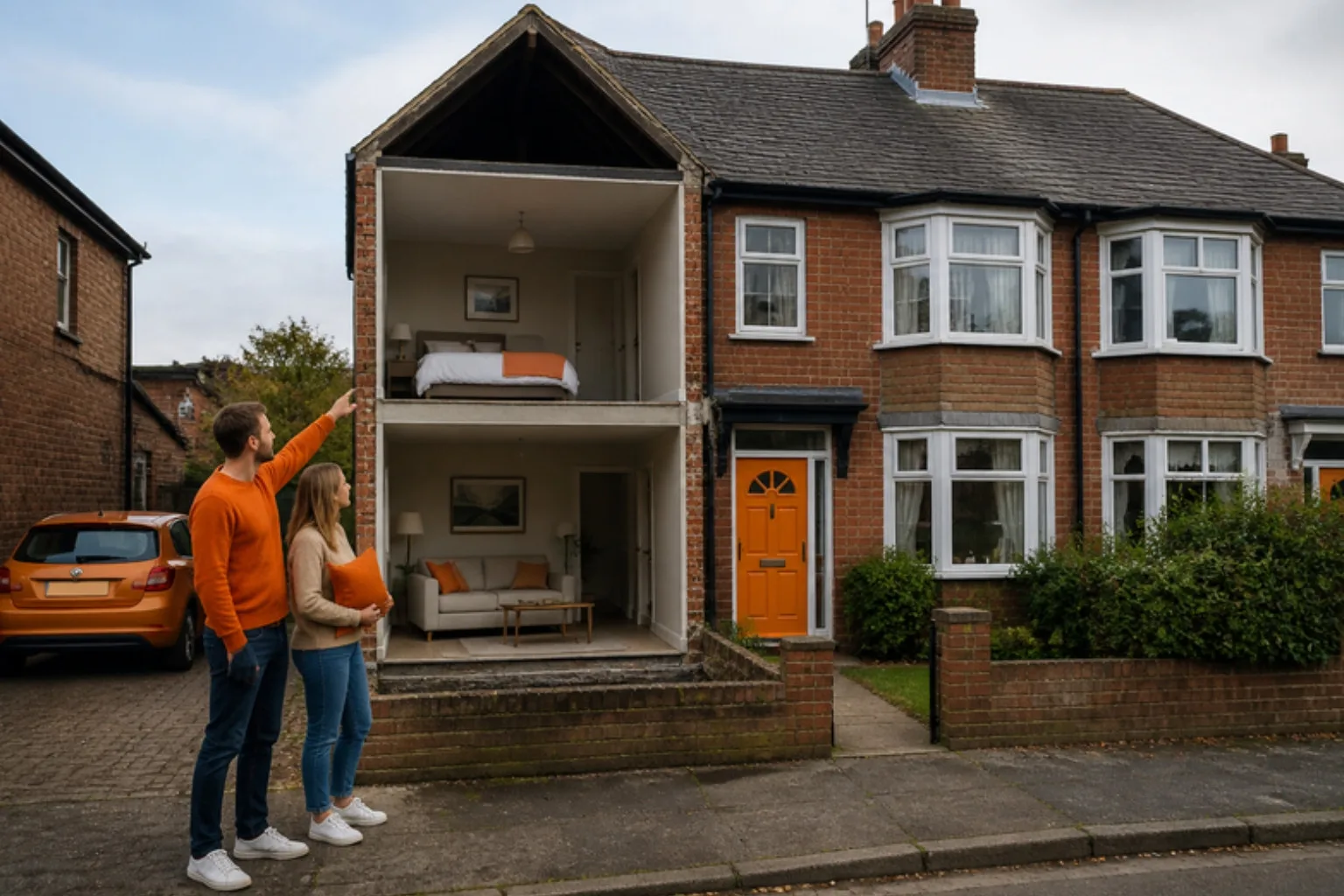
Not quite. Buildings cover protects the structure of your home and its permanent fixtures, while “home insurance” is the wider label for buildings cover, contents cover, or both on one policy. The Financial Ombudsman Service says home insurance is usually made up of two parts, the building and the contents. You can buy them separately or together.
So if you have “home insurance”, check which parts it includes. Homeowners usually need both; renters usually need only contents.
What does buildings insurance cover?
It pays to repair or rebuild the physical structure of your home after an insured event such as fire, storm, flood or subsidence. That means the walls, roof and floors, plus permanent fixtures and fittings like baths and fitted kitchens.
The ombudsman uses a simple test: if an item can reasonably be removed and taken to another home, it is usually contents, not buildings. Outbuildings such as garages and sheds are often included, but check the policy wording to be sure (FOS). Our buildings cover page goes through common exclusions in more detail.
What counts as contents rather than buildings?
Contents are the things you would take with you if you moved: furniture, clothes, your TV, jewellery. A few items sit on the line.
| Item | Usually treated as | Why |
|---|---|---|
| Fitted kitchen units | Buildings | Fixed in place and part of the fabric of the home |
| Built-in oven or dishwasher | Buildings | Built-in appliances count as fixtures |
| Fitted wardrobes | Buildings | Fixed to the structure |
| Fitted carpets | Contents | They can be taken up and re-laid fairly easily |
| Glued laminate fixed under skirting | Buildings | Hard to remove intact, so it has become part of the building |
| Click-together laminate | Can be contents | No more fixed to the room than a carpet |
| TV aerial fixed to the roof | Buildings | Fixed and part of the fabric of the property |
| Free-standing fridge or TV | Contents | Easy to unplug and move |
Source: Financial Ombudsman Service. Your policy wording has the final say, so check its definitions.
Which cover do you need if you own, rent or let?
It depends on whether you are responsible for the structure.
| Your situation | Buildings cover | Contents cover |
|---|---|---|
| Homeowner with a mortgage | Normally a condition of the mortgage | Optional; protects your belongings |
| Homeowner, no mortgage | Your choice; any rebuild bill would be yours | Your choice |
| Renting from a landlord | Arranged by the landlord | Your own policy for your belongings |
| Leaseholder in a flat | Usually arranged by the freeholder and paid through the service charge | Your own policy |
| Landlord letting a property | Needed, usually as part of a landlord policy | For any furnishings you supply |
Buying a home with a mortgage
GOV.UK’s How to buy guide for England and Wales says buildings cover is normally a requirement of having a mortgage. It also says you need it arranged by exchange of contracts, because once you sign you are legally responsible for the property (GOV.UK How to buy).
Renting or owning a leasehold flat
If you rent, the landlord arranges buildings insurance, so the ombudsman says you only need contents cover (FOS). Our page on tenants contents insurance explains what that typically includes.
If you own a leasehold flat, GOV.UK says your landlord will usually insure the building (not the contents) and charge it through the service charge. You can ask for a summary of the policy and challenge the cost at a tribunal if you think it is unreasonable (GOV.UK). Blocks of flats are often covered by a multiple-occupancy buildings policy taken out by the freeholder (FOS).
Letting out a home you own? Home policies often restrict cover once a property is let, so look at landlord insurance instead.
Should you buy buildings and contents together or separately?
Either works. The ombudsman notes that some people buy contents from one insurer and buildings from another (FOS). Compare a combined price against two separate ones.
One thing to watch: even on a combined policy, each section can have its own limits and extras. The ombudsman notes that an accidental damage claim might succeed under one section but not the other, so read both parts of the schedule.
How much buildings cover do you need?
You need enough to pay for a full rebuild, not the price you paid for the house. The ombudsman gives a clear example of how an insurer might word the question: buildings value including the rebuilding cost, debris removal, fees and VAT (FOS underinsurance guidance).
Getting it wrong can cost you. Some policies have an “average clause”. If your rebuild cost is £400,000 but you insured it for £200,000, you are 50% underinsured, and some insurers would then pay only half of any claim.
- Look for a rebuild figure in your mortgage valuation or survey report, if it includes one.
- If an online form pre-fills a rebuild or contents figure, check it rather than accepting it.
- Update the figure after an extension, loft conversion or new kitchen.
- Tell your insurer about changes to the property, as undisclosed changes could affect a claim.
A worked example: one leak, two sections of a policy
Sam and Aisha buy a terraced house in Leeds with a mortgage. Their lender asks for buildings cover from exchange, so they arrange it then. They add contents cover a week later, from a different insurer, once they have counted up what they own.
Six months on, a washing machine hose splits while they are at work. Water ruins the glued laminate in the kitchen, swells the fitted units and soaks a sofa and a rug.
The laminate and the kitchen units are fixtures, so they claim those under the buildings policy. The sofa and rug go on the contents claim. Each policy has its own excess, so they pay two.
What does home insurance not cover?
Neither part is a maintenance contract. The ABI lists general wear and tear, poor maintenance and mechanical or electrical breakdown as usual exclusions. It adds that cover is often restricted if the home is empty for 30 or 60 days, or let to tenants (home insurance guide).
The ombudsman lists flooding among the problems home cover protects against. If your home is at high flood risk, Flood Re, a joint scheme between the Government and insurers, aims to make that part of household cover more affordable.
If you want help with a sudden boiler failure or blocked drain, that is usually a separate product: see home emergency cover.
Common questions about buildings and home insurance
Is home insurance the same as building insurance?
No. Building insurance covers the structure and fixtures of your home. Home insurance is the umbrella term, and a home policy may include buildings cover, contents cover or both, so check your schedule to see which parts you have.
Do you need home insurance?
If you have a mortgage, GOV.UK’s How to buy guide says buildings cover is normally a requirement. Contents cover is optional, but without it you would replace belongings lost in a fire or burglary yourself.
Is contents insurance part of home insurance?
It can be. Many home policies combine buildings and contents, but you can also buy contents on its own. Renters usually only need contents cover, because the landlord arranges insurance for the building itself.
Do tenants need buildings insurance?
Usually not. The Financial Ombudsman Service says people who rent will only need contents insurance, because the landlord is responsible for arranging buildings insurance. Check your tenancy agreement if you are unsure who insures what.
Who pays for buildings insurance on a leasehold flat?
Normally the freeholder arranges it and you pay your share through the service charge. GOV.UK says you can ask for a summary of the policy and challenge the cost at a tribunal if it seems unreasonable.
Are carpets covered by buildings or contents insurance?
Contents, in most cases. The Financial Ombudsman Service treats fitted carpets as contents because they can be taken up and re-laid relatively easily. Glued laminate fixed under the skirting is usually treated as part of the building.
Is a garden shed covered by buildings insurance?
Often, yes. The ombudsman says buildings policies usually include outbuildings such as sheds and garages. Tools and bikes stored inside fall under contents, so check both sections.
When should buildings insurance start when buying a house?
From exchange of contracts. GOV.UK’s How to buy guide says you need buildings insurance in place to exchange. Once you sign the contract, you are legally responsible for the property, even before you move in.
Does home insurance cover flooding?
Usually. The Financial Ombudsman Service lists flooding among the problems home insurance protects against. For high-risk homes, Flood Re, a Government and insurer scheme, aims to make flood cover more affordable.
Can I have buildings and contents insurance with different insurers?
Yes. The Financial Ombudsman Service notes that some policyholders buy contents from one insurer and buildings from another. Each policy then has its own excess and limits.
What to do next
Start by checking your current schedule. Does it say buildings, contents or both, and what rebuild figure is shown? Then you can compare home insurance quotes on Tiger.co.uk for buildings, contents or a combined policy with one short form.
Prices and cover vary between insurers, so read the policy wording before you buy. Find out more about home insurance, buildings insurance and contents insurance on Tiger.co.uk.
Fact-checked by Ian Wilson, Managing Director at Tiger.co.uk. 20+ years in price comparison; MEng, Queen’s University Belfast.