Do you need special travel insurance when pregnant?


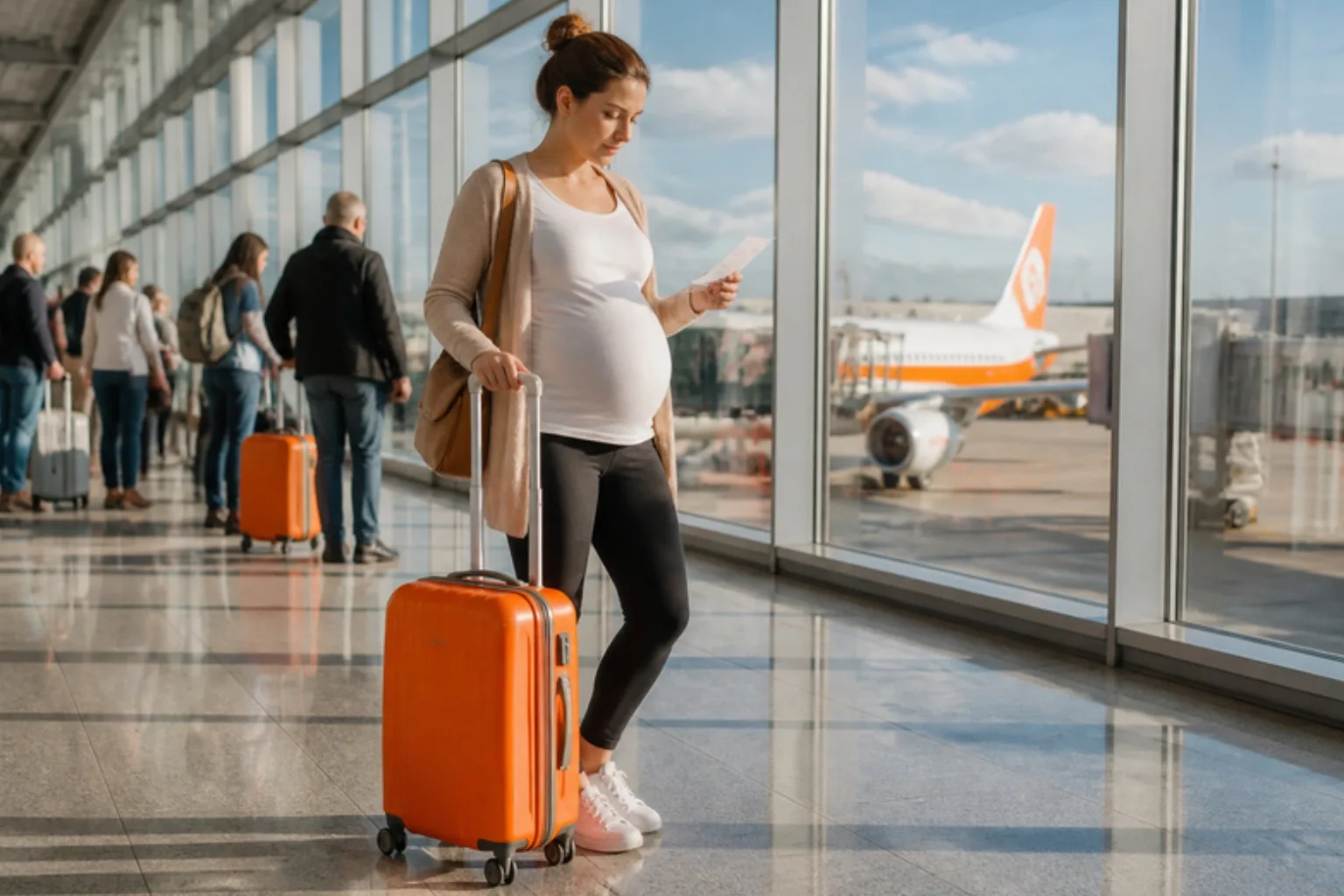
Usually not. You do not need a product labelled for pregnancy. You do need a policy that covers pregnancy complications, an early birth and changing your flight home if you go into labour. The NHS lists exactly those three things as cover to check before you travel (NHS, Travelling in pregnancy).
The Royal College of Obstetricians and Gynaecologists (RCOG) also says to tell your insurer you are pregnant before you go (RCOG, Air travel and pregnancy). The details that decide a claim are the week limits, the cancellation terms and whether a newborn is covered.
Is pregnancy a pre-existing medical condition for travel insurance?
It depends on the insurer, so check how your policy treats it. Some ask about pregnancy separately from medical conditions.
The UK health bodies are clear on what to do either way. The National Travel Health Network and Centre (NaTHNaC) says to declare all medical conditions to insurers, including pregnancy (TravelHealthPro, updated June 2026).
Complications are a different matter. If you have been diagnosed with something linked to the pregnancy, such as high blood pressure or a placenta problem, treat it like any other condition and declare it. The Foreign, Commonwealth & Development Office warns that failing to declare something may invalidate your travel insurance (GOV.UK, Foreign travel insurance).
What should your travel insurance cover if you are pregnant?
It should pay for emergency medical care linked to the pregnancy, care for a baby born early, and the extra cost of getting you both home. Use this checklist against the policy wording, not just the summary page:
- Pregnancy complications: emergency treatment abroad, including labour that starts early.
- A premature baby: TravelHealthPro says to check the policy covers care of a pre-term baby and repatriation costs (NaTHNaC).
- Changing your return date: the cost of new flights if you go into labour or a doctor says you cannot fly.
- Week limits: the latest week of pregnancy the policy covers, measured on your return date as well as your outbound date.
- Cancellation: what happens if a complication means you cannot go, and whether finding out you are pregnant after booking counts.
- Exclusions: wording about normal childbirth, routine antenatal checks or travel after a doctor has told you not to.
Look for exclusions that mention normal childbirth or routine check-ups, and read them closely. If anything is unclear, ask the insurer before you buy. Our page on cancellation cover explains how that part of a policy works.
How many weeks pregnant can you travel abroad?
Most people can travel well into pregnancy, but limits tighten from about 28 weeks. The RCOG says the safest time to fly is before 37 weeks with one baby, or before 32 weeks with an uncomplicated twin pregnancy (RCOG). It adds that travel insurance may be harder to find after 37 weeks.
| Stage of pregnancy | What UK health bodies say | What to check on your policy |
|---|---|---|
| Up to 12 weeks | Miscarriage risk is higher in the first 3 months, whether you travel or not (NHS) | Whether miscarriage abroad is covered as a complication |
| Around 4 to 6 months | Many women find mid-pregnancy the easiest time to travel (NHS) | Standard medical and cancellation cover |
| From 28 weeks | Airlines may ask for a letter confirming your due date and no complications (NHS) | Week limit on your return date, not just the day you leave |
| 28 to 32 weeks by sea | Ferries may refuse heavily pregnant passengers, often beyond 32 weeks, or 28 weeks on high-speed crossings (NHS) | Cover for the ferry leg and any cruise restrictions |
| From 37 weeks (32 for twins) | Labour is more likely and many airlines will not carry you (RCOG) | Whether any cover is available at all |
Sources: NHS and RCOG. Airlines and ferry companies set their own rules, so check before you book.
Does a GHIC cover pregnancy care in Europe?
Partly. A UK Global Health Insurance Card covers state healthcare that cannot wait, including routine maternity care. That only applies if you are not going abroad to give birth (NHS, UK GHIC).
It does not cover private hospitals or being flown back to the UK, and the NHS says it is not a replacement for travel insurance. Carry both on a trip to the EU, and see our page on travel insurance for Europe.
A worked example: a late summer trip at 31 weeks
Hannah books a week in Portugal. She will be 30 weeks pregnant when she flies out and 31 weeks when she flies back, with no complications so far.
Before buying cover, she reads the pregnancy section of two single trip policies. One stops covering pregnancy problems at a fixed week before her return date, so she rules it out. The other covers complications up to a later week and includes the cost of new flights if she cannot fly home.
She tells the insurer she is pregnant, gets a letter from her midwife for the airline, and packs her maternity notes and GHIC. If a scan the week before shows a problem and her midwife says not to fly, she has evidence for a cancellation claim. Whether it pays still depends on the policy terms.
For a one-off holiday like this, a single trip policy lets you set cover around the exact dates. If you already hold an annual multi-trip policy, check its pregnancy wording before each trip, as week limits apply to every journey.
Can you claim if you cancel a holiday because you are pregnant?
Only in some cases. The cancellation section lists the reasons a policy accepts, and simply deciding not to go may not be one of them. A claim is more likely to succeed when a doctor or midwife says you cannot travel because of a complication.
The RCOG suggests having insurance that lets you cancel for issues related to your pregnancy (RCOG). GOV.UK also says to buy cover as soon as possible after booking, so cancellation protection starts early (FCDO). Our guide on cancelling a holiday looks at other reasons people call off a trip.
What else should you sort before you travel pregnant?
- See a travel health clinic or your GP 6 to 8 weeks before you go, which TravelHealthPro recommends (NaTHNaC).
- Check the destination for Zika. The NHS says pregnant women are not recommended to travel to areas where it is present.
- Find the nearest hospital with maternity care and pack your maternity notes.
- Save the insurer’s 24-hour emergency number and contact them early if you need treatment.
- Check your passport has enough validity left, using our passport checklist.
If you are hiring a car, a car hire excess policy can cover the excess the rental firm would charge after damage. With a baby on the way, it may also be a good moment to review life insurance for your family.
Questions about pregnancy and travel cover
Do I need to tell my travel insurer I’m pregnant?
Yes, it is safest to tell them. The RCOG says you should inform your insurer that you are pregnant before you travel, and TravelHealthPro says pregnancy should be included in your declaration.
Can I get travel insurance if I’m 37 weeks pregnant?
It can be difficult. The RCOG says travel insurance may be harder to get after 37 weeks, and most airlines will not let you fly then. Check the week limit in any policy wording.
Will travel insurance pay if I go into labour abroad?
It depends on the policy wording, so check it before you buy. The NHS says to make sure your cover includes pregnancy-related care during labour, premature birth and the cost of changing your return date.
Is my baby covered if they are born early abroad?
Only if your policy says so. TravelHealthPro says to check the policy covers care of a pre-term baby and repatriation costs, as neonatal care abroad is not automatically included in every policy.
Does a GHIC cover giving birth abroad?
No, not if you travel in order to give birth. The NHS says a UK GHIC covers routine maternity care as long as you are not going abroad to give birth, and it never covers repatriation.
Can I claim if I found out I was pregnant after booking?
Being pregnant on its own is not normally a reason to claim. Some policies pay if complications stop you travelling, or if the trip falls close to your due date, so check the cancellation section.
When do airlines need a fit to fly letter in pregnancy?
The NHS says that after week 28 an airline may ask for a letter confirming your due date and that you are not at risk of complications. Rules vary, so check with your airline.
Does annual travel insurance cover pregnancy?
It can, but the pregnancy terms apply to each trip. Check the latest week of pregnancy covered against your return date for every journey, and tell the insurer about any new complications.
What to do next
Before you choose travel insurance when pregnant, work out how many weeks along you will be on your return date. Then shortlist policies that cover you up to that point. Read the pregnancy and cancellation sections before you buy, and tell the insurer you are expecting.
Tiger.co.uk lets you compare travel insurance quotes from UK insurers in one place. Cover and limits vary, so check each policy wording. You can read more about travel insurance and family travel cover on Tiger.co.uk.
Fact-checked by Ian Wilson, Managing Director at Tiger.co.uk. 20+ years in price comparison; MEng, Queen’s University Belfast.