How many vehicles do you need for fleet insurance?


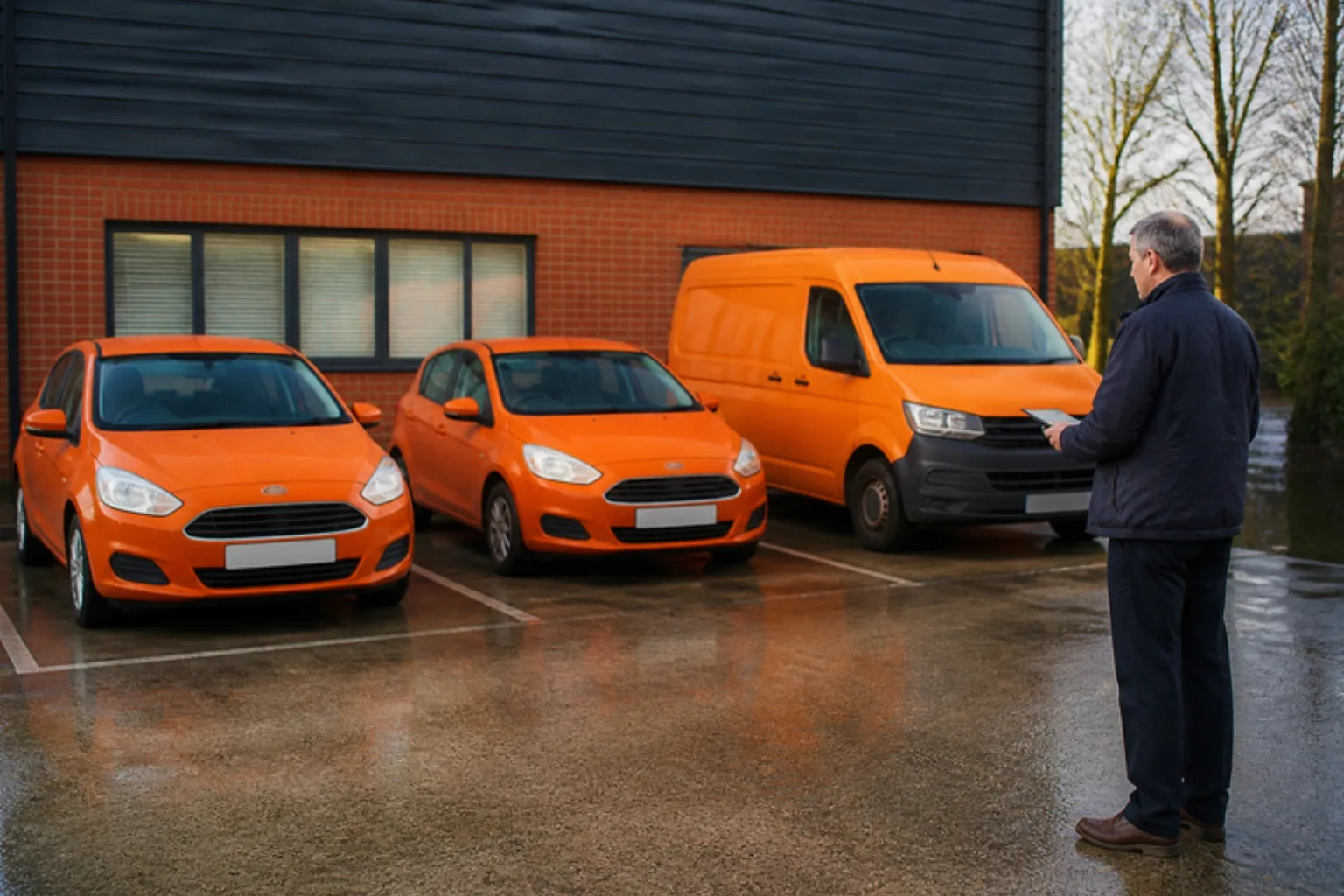
There is no legal minimum. Each vehicle used on a road must be insured (Road Traffic Act 1988, section 143), but the law does not say how many can share one policy.
In practice you need at least two, since a single vehicle goes on its own policy. Each insurer then sets its own floor, so two or three vehicles may get a fleet quote from one insurer and a multi-van or small fleet offer from another.
Is there a legal minimum number of vehicles for a fleet?
No. “Fleet” is an insurance term, not a legal one. The legal duty sits with each vehicle and each journey, whether you run one van or forty.
Two parts of the Road Traffic Act 1988 matter most. Section 143 makes it an offence to use, or to cause or permit someone else to use, a vehicle on a road without cover. Section 144A adds a separate offence for the registered keeper of a vehicle that is not insured, even when it is parked.
Why do insurers set a minimum fleet size?
Because a fleet is priced as one risk. The insurer looks at the vehicles, drivers and claims together, and that only works once there are enough of them to rate as a group.
Below its floor, an insurer would rather quote each vehicle on its own. Labels vary too, so one firm’s “mini fleet” is another’s small fleet. Check the insurer’s rules, not the product name.
Which vehicles count towards your fleet total?
Most vehicles your business keeps and uses can be listed, but some need a word with the insurer first.
| Vehicle | Can it go on the schedule? | What to tell the insurer |
|---|---|---|
| Cars and vans the business owns | Yes | Registration, value and what each one does |
| Leased or contract hire vehicles | Yes, in most cases | Who owns it and who keeps it |
| Staff’s own cars used for work | No, these are a grey fleet | Each driver needs business use on their own car policy |
| Trailers | Ask the insurer | Some fleet policies list trailers and some need separate trailer cover |
| A vehicle off the road for repair or storage | Ask the insurer | Whether it stays listed or is declared off the road (SORN) |
| Goods vehicles over 3,500kg | Often, with the right licence | Your goods vehicle operator’s licence details |
Mixing types is fine on most schedules. A car and a van can share one policy, as our car and van insurance page shows, and an all-van business may suit multi-van cover.
Can you get a fleet policy with only two or three vehicles?
Often, yes, but not from every insurer. At this size you have three routes to test against each other:
- Separate policies: each vehicle keeps its own cover, renewal date and no claims record.
- A multi-vehicle policy: such as car and van, or several vans, on one schedule.
- A small fleet policy: one schedule, with named or any-driver cover across the vehicles.
Who drives matters more than the count. If staff swap vehicles, a fleet set-up is simpler than naming everyone on separate policies (see how fleet insurance works).
What happens if your fleet drops below the insurer’s minimum?
Tell the insurer as soon as you sell or return a vehicle. Some will keep the policy running to renewal, while others may move you to a different product, so ask how yours handles it.
Plan the next step before the old cover ends. Under section 144A, keeping an uninsured registered vehicle is an offence. The exceptions in section 144B include a vehicle not used on a road where the right notice has been given.
That notice is a SORN. GOV.UK says you cannot use a SORN vehicle on the road until you tax it again. If you have sold the vehicle, you tell DVLA you sold it instead of making a SORN.
Do the rules change as your fleet gets bigger?
The insurance rules do not. Other duties depend on what the vehicles are, and weight is the big one.
GOV.UK says a business carrying goods needs a goods vehicle operator’s licence for a vehicle with a gross plated weight over 3,500kg. Where there is no plated weight, the trigger is an unladen weight over 1,525kg. The rules are different in Northern Ireland.
Towing counts too. The same GOV.UK page says a vehicle and trailer combination needs a licence if their gross plated weights add up to more than 3,500kg. The same applies if their combined unladen weight is over 1,525kg. There is one exception: you do not need a licence if the trailer’s unladen weight is under 1,020kg and you only carry your own goods.
When you apply, you give the number of vehicles and trailers you will keep at each operating centre. You can add more vehicles to the licence later, so update it and the insurance schedule together. Heavier vehicles may be better placed on HGV insurance or a fleet policy that accepts them.
How do you get fleet insurance, step by step?
Work through these steps in order:
- Count the vehicles using the table above, leaving out grey fleet cars.
- Pick a driver set-up: named drivers, or any driver above a minimum age.
- Set the use for each vehicle. MIB says business use covers anything beyond the commute to one workplace, and deliveries need hire-and-reward cover.
- Note where each vehicle is kept by day and overnight, as MIB lists this among the details your policy must get right.
- Line up the start date with the renewal dates of your current policies, so nothing is cancelled early or left uncovered.
- Gather your quote details using the checklist on our fleet hub, then compare quotes.
- Check every registration on MIB’s Check Your Vehicle service once cover starts. MIB says a new policy may show as uninsured at first, so search again after seven days.
An “insured” result does not confirm the use or drivers are right (see how to check if a car is insured).
A worked example: a landscaping firm in Leeds
Priya runs a garden landscaping business in Leeds. She starts with one van on a business van policy, with herself as the only driver.
In her second year she buys another van and hires two staff who share both vans. Two separate policies would mean naming every driver on each one, so she compares a multi-van quote with her two single policies.
A year later she adds a pick-up and a tipping trailer. With three vehicle types and four drivers, she asks for small fleet quotes. She checks which insurers will list the trailer and sets the start date to match her vans’ renewal.
When the fleet is live, she runs each registration through Check Your Vehicle a week later. Her tipping trailer’s unladen weight is under 1,020kg and she only carries her own materials, so GOV.UK’s exemption means she does not need an operator’s licence yet. If she buys a heavier trailer, she will check the combined plated weight of pick-up and trailer against GOV.UK’s rules first.
Questions people ask about fleet size
Can I get fleet insurance with two vehicles?
Some insurers will quote a fleet policy for two vehicles, while others set a higher minimum or offer a multi-vehicle policy instead. Compare a fleet quote with separate policies, as the better choice depends on your drivers and vehicles.
Do cars and vans count together towards a fleet?
Usually, yes. Most fleet schedules accept a mix of cars, vans and pick-ups, and each vehicle keeps its own cover level and class of use. Tell the insurer exactly what each vehicle is and how it is used.
Is there a maximum number of vehicles on a fleet policy?
No law caps it. Each insurer decides the range of fleet sizes it will cover, so a fast-growing business may outgrow one insurer’s product. Review the fit at each renewal and compare quotes when your fleet changes size.
Do staff’s own cars count as part of the fleet?
Not usually. Cars your staff own and use for work are known as a grey fleet. MIB says business use is needed for any trip beyond the commute to one workplace, so each driver needs it on their own car policy.
Can trailers go on a fleet policy?
Some fleet policies list trailers on the schedule, while others need separate trailer insurance. Ask the insurer, and remember that a heavy vehicle and trailer combination can also affect whether you need an operator’s licence.
Do I need an operator’s licence once my fleet reaches a certain size?
No, the trigger is weight, not the number of vehicles. GOV.UK says a business carrying goods needs a goods vehicle operator’s licence for vehicles with a gross plated weight over 3,500kg. A vehicle and trailer whose gross plated weights add up to more than 3,500kg also needs one. A trailer with an unladen weight under 1,020kg is exempt if you only carry your own goods. The rules differ in Northern Ireland.
Does a vehicle off the road still need to be on the policy?
A registered vehicle that is not insured can be an offence for the keeper under section 144A of the Road Traffic Act 1988, unless an exception applies. If a vehicle is coming off the schedule, ask the insurer and make a SORN with DVLA if it will not be used on the road.
Does it matter if the vehicles are kept at different addresses?
Yes. MIB says your policy must correctly show where each vehicle is kept during the day and overnight. Give the insurer the right address for every vehicle, as wrong details can leave a vehicle without valid cover.
What to do next
Write down every vehicle, who drives it and what it does in a normal week. If you only run one, business van insurance may be simpler, and many fleets add breakdown cover too.
For two or more, compare the routes side by side on the Tiger.co.uk fleet insurance page. When you are ready, start a fleet quote with Tiger.co.uk and check the drivers, use and excess on each quote. Cover varies between insurers, so read the policy wording before you buy.
Fact-checked by Ian Wilson, Managing Director at Tiger.co.uk. 20+ years in price comparison; MEng, Queen’s University Belfast.