Does home insurance cover roof damage and leaks?


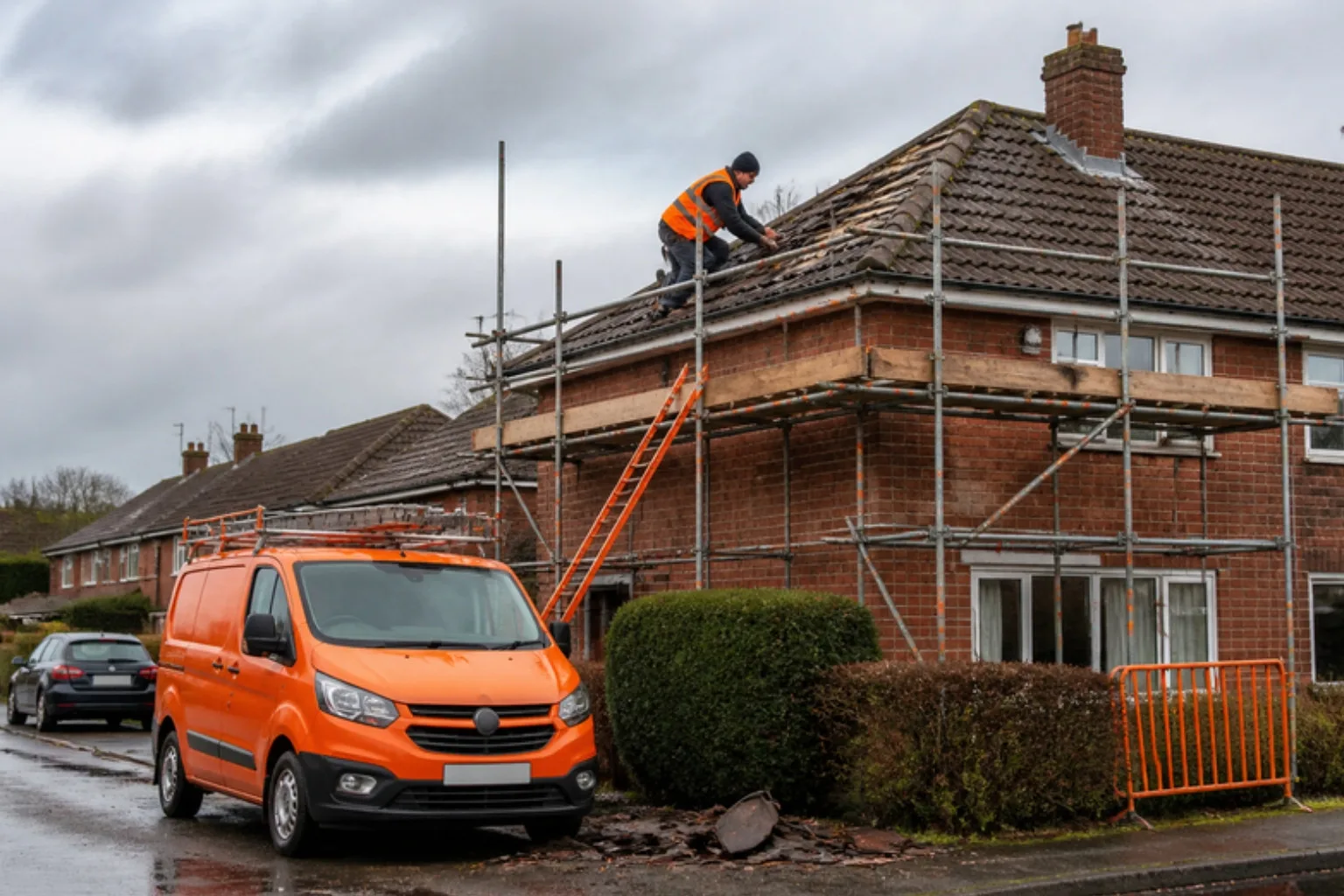
Yes, if the damage is sudden and you have buildings cover. Storm damage, a fallen tree or a fire are the usual examples. Buildings policies usually cover storm damage, according to the Financial Ombudsman Service.
What they rarely pay for is a roof that has simply worn out. Slipped tiles, perished felt or an ageing flat roof count as upkeep, so that bill stays with you. Wording varies, so check the storm and exclusions sections of your schedule.
What roof damage does buildings insurance usually pay for?
A single, sudden event such as a gale is the kind most likely to be paid, under the buildings section.
| What happened | Usual position | What the insurer will look at |
|---|---|---|
| Tiles or ridge lifted in a storm | Often covered under storm | Weather records for your area on that date, and the roof’s condition |
| Tree or branch falls on the roof | Often covered, under storm or falling trees | Whether the tree was sound, and whose tree it was |
| Roof gives way under settled snow | May be covered as storm | Whether heavy snow fell in a short time, or the roof was already weak |
| Leak from worn flashing, old felt or cracked mortar | Usually excluded as wear and tear | The age and state of the roof |
| Flat roof that fails after years of use | Usually excluded as gradual damage | Whether the problem would have been clear to you |
| Damage you cause, such as a foot through the loft floor | Only with accidental damage cover | Whether you added that cover, and its exclusions |
On snow, the ombudsman notes damage often comes from the weight of settled snow, and it checks whether storm or maintenance was the cause (FOS).
Is a leaking roof covered by home insurance?
A leak is covered only when a sudden insured event caused it. If a storm blew tiles off and rain came in that night, the roof repair and the water damage inside may both be considered. If the leak came from slow decay, both are usually turned down.
A stained ceiling falls under buildings cover, while ruined carpets or a sofa fall under contents. The ombudsman expects insurers to check all parts of your policy, not just the storm section (FOS).
Slow leaks often show up as damp first. See whether buildings insurance covers damp for how gradual water damage is treated.
How do insurers decide if a storm damaged your roof?
They look at the weather, the damage and the roof. If you complain about a refused storm claim, the ombudsman asks three questions:
- Was there a storm on or around the date the damage happened?
- Is the damage consistent with what storms usually cause?
- Was the storm the main cause, or was the roof going to fail regardless?
The ombudsman says a storm usually means violent winds, often with rain, hail or snow. Heavy rain, hail or snow on its own can also count (FOS). It checks local weather station reports and the Met Office list of named storms.
Why is roof wear and tear not covered?
Home insurance pays for sudden events, not ageing. Most wordings leave out wear and tear. Many also rule out harm that builds up slowly, which some label a “gradually operating cause” (FOS gradual damage approach). In the ombudsman’s words, everything will wear out eventually and a policy cannot protect you from that.
A roof need not be perfect for a storm claim to succeed, though. The ombudsman weighs whether the storm or the roof’s condition was the main cause. The insurer must prove a wear and tear exclusion applies, for example with an inspection report. The ombudsman may not accept a report based on an aerial photo instead of a proper roof inspection (FOS guidance for insurers).
Are flat and thatched roofs treated differently?
Often, yes. Some insurers ask what share of the roof is flat, and may charge more or decline. For thatch, see our thatched roof insurance page.
When you get a quote, describe the roof as it really is, including how much is flat and, for thatch, when it was last redone. Section 2 of the 2012 consumer insurance disclosure law expects reasonable care, so a careless slip could affect a later claim. For a home with a large flat section, see flat roof home insurance.
Who pays for roof repairs if you rent or own a leasehold flat?
If you rent, your landlord does. In England, GOV.UK lists the structure and exterior among a landlord’s repair duties (GOV.UK private renting). Welsh law and Northern Ireland law set the same duty. In Scotland, a rented home must be wind and watertight, with the roof in reasonable condition (mygov.scot).
Report a leak to your landlord in writing, with photos. In England, if repairs stall, GOV.UK points tenants to the council’s environmental health team.
In a leasehold flat, the landlord usually insures the building through your service charge (GOV.UK leasehold property). You would normally cover your own belongings with flat insurance. If you let a home out, the roof falls under landlord insurance.
In Scotland, each tenement owner must by law insure their flat and the parts of the building that go with it (Tenements (Scotland) Act 2004, s18). One common policy for the whole building can meet that duty, so ask your factor whether one is in place.
A worked example: one storm, two roofs
Priya and her neighbour Tom live in a pair of 1930s semis. A named storm hits overnight in February, lifting ridge tiles on both roofs. Rain comes through Priya’s bedroom ceiling.
Priya takes photos, notes the storm’s name and calls her insurer that day. Her surveyor finds the roof was sound, so the claim is considered under storm, less her excess.
Tom’s surveyor finds his ridge mortar had crumbled years ago and his flat-roofed extension had leaked all winter. His insurer declines the extension as wear and tear, so the state of each roof decided it.
First steps after storm damage to your roof
- Stay safe: keep off the roof and away from loose tiles or a sagging ceiling.
- Limit the damage: catch drips, move belongings and ask a roofer about a temporary cover. Keep receipts.
- Take photos: outside and inside, before repairs. Note the date and any storm name.
- Call your insurer early: ask before permanent repairs, as they may want to inspect first.
- Ask for the report: if your claim is declined, request the surveyor’s findings in writing.
Don’t sit on a known problem. If you knew a slipped tile was letting water in and left it, the ombudsman may back a refusal (FOS). For a night-time leak, home emergency cover can help with an emergency call-out, depending on the policy.
Roof insurance claims: common questions
Will contents insurance pay for roof damage?
No. The roof is part of the structure, so buildings cover deals with it. Contents cover may pay for belongings soaked by rain, but only when an insured event caused the leak.
Does buildings insurance cover roof repairs?
It covers repairs after insured damage, such as tiles blown off in a storm or a tree falling on the roof. Routine repairs and maintenance, like re-pointing or replacing a tired roof, are not covered.
Is storm damage to a roof covered?
Usually, yes. The Financial Ombudsman Service says buildings policies usually cover storm damage. The insurer will check there was a storm on the date and that it, not the roof’s condition, was the main cause.
Does home insurance cover a tree falling on my roof?
Often, yes, under the storm or falling trees part of buildings cover. The insurer may ask whether the tree was healthy and whose land it stood on.
What wind speed counts as a storm for insurance?
It depends on your policy. Some set a minimum wind speed on the Beaufort scale. The ombudsman considers that, but also weighs local weather reports and other evidence.
Does home insurance cover a flat roof?
Many insurers will cover a flat roof for insured events, though some ask how much of the roof is flat and charge more. Damage from a flat roof wearing out over time is usually excluded.
Do I have to declare a flat or thatched roof when I buy cover?
Yes, if the insurer asks. Give the roof materials, the share that is flat and any rethatch date. A careless wrong answer about the roof could affect a later claim.
How do I challenge a declined roof claim?
Ask for the surveyor’s report and check whether anyone inspected the roof or relied on an aerial photo. Then complain formally. Most firms get 8 weeks to respond, and after their final response you have 6 months to take it to the Financial Ombudsman Service, which costs nothing.
What to do next: check your roof cover
Before your renewal, dig out your schedule and check three things:
- how the policy defines a storm
- whether accidental damage is included
- the excess you would pay on a roof claim
If your cover falls short, you can get home insurance quotes on Tiger.co.uk and compare each insurer’s storm and roof terms. Our buildings insurance page explains how the structure itself is insured, and the main home insurance page covers the rest.
Already had a roof claim refused? The ombudsman’s how to complain page sets out each step.
Fact-checked by Ian Wilson, Managing Director at Tiger.co.uk. 20+ years in price comparison; MEng, Queen’s University Belfast.