Do trade plates cover insurance? What the plates do and do not include


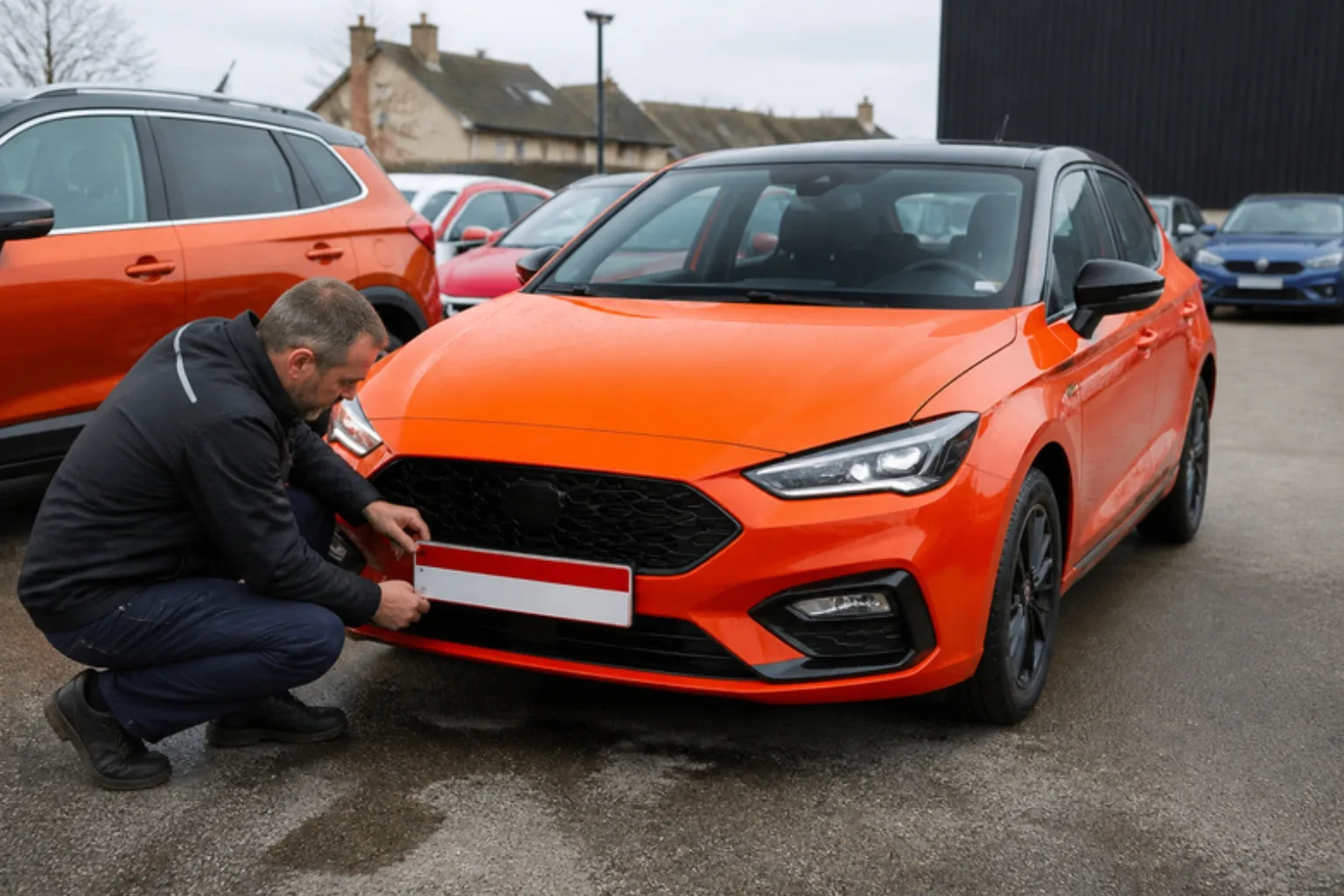
No. A set of trade plates comes with no insurance at all. GOV.UK says you can only use them on a vehicle that is insured, roadworthy and has a valid MOT or is exempt from one (GOV.UK, rules for using trade plates).
The plates cover registration and vehicle tax on set business journeys. The insurance comes from your own motor trade policy.
What do trade plates cover?
Trade plates cover the need to register and tax a vehicle, as long as the journey is one your licence allows. GOV.UK says employees and customers can drive on them for certain purposes “without having to pay to register and tax it” (GOV.UK, trade licence plates).
The licence fee you pay the DVLA is itself a rate of vehicle duty. Our trade plate insurance page lists the current fees.
| What the law asks for | Covered by trade plates? | What you need instead |
|---|---|---|
| Registration | Yes, on permitted journeys | Nothing extra |
| Vehicle tax | Yes, the licence fee is the duty | Nothing extra |
| Insurance | No | A motor trade policy covering vehicles on your plates |
| MOT | No | A valid MOT, or an exempt vehicle |
| Roadworthy condition | No | Brakes, tyres and lights in legal order |
| Personal driving | No | A registered, taxed and insured car |
Why the plates do not insure the vehicle
Trade plates are a DVLA licence, not an insurance product, so normal insurance law applies to every car on them. GOV.UK says driving a vehicle you are not insured for can mean a £300 fixed penalty and 6 points, or an unlimited fine and a ban in court (GOV.UK, driving without insurance).
So the real question is whether your policy covers the cars you drive on your plates. That is usually the road risk section of a motor trade policy, but policies vary. Some limit who can drive, cap vehicle values, or only cover customer test drives with you in the car. Check the policy wording or ask the insurer.
What insurance do you need for trade plates?
You need motor trade insurance, and the DVLA checks it first. With form VTL301 you send a copy of your Motor Trade Insurance Certificate in the same name as the form; other types of insurance are not accepted (GOV.UK, apply for a trade licence).
If you trade from home or now and then, a part-time motor trade policy can still give you a certificate. Road risk cover insures the driving itself.
Do trade plates cover MOT?
No. The vehicle needs a valid MOT or must be exempt (GOV.UK). A car needs its first MOT by the third anniversary of its registration, so a brand-new car is not due one yet (GOV.UK, getting an MOT).
Can you drive a car with no MOT on trade plates?
Only on the trips the MOT rules allow. GOV.UK says a car whose MOT has run out can only be driven to or from a repair, or to a pre-arranged MOT test. Driving without a valid MOT can bring a fine of up to £1,000.
Both trips are also allowed trade purposes under Schedule 6 of the 2002 Regulations. The car must still be insured and safe. If you are unsure whether a vehicle is exempt, check with the DVLA first.
What are trade plates used for?
Only for business journeys linked to your trade, and only for the purpose on your application. The DVLA lists the allowed uses in its VTL301G guidance notes (February 2026):
- road tests after building, modifying or repairing a vehicle
- test drives for a likely buyer, including the trip there and back
- delivering a sold vehicle to where the buyer will keep it
- moving it between your premises, or to and from another dealer or repairer
- trips to a workshop for fitting, painting, valeting or repair (not a public car wash)
- trips to and from an auction or storage site
- going to a weighbridge, inspection, test or scrapyard
- collecting a vehicle under repossession
The school run, a trip to the shops or using stock as your daily car are not on the list.
Trade plates rules that catch traders out
The VTL301G notes list these as offences:
- plates on a vehicle registered to you, unless you are a manufacturer doing development work
- splitting a set across two vehicles
- plates on a parked vehicle
- carrying passengers for hire, reward or on a personal basis
- carrying goods, apart from allowed loads such as parts to be fitted
- using an expired licence, or faded or altered plates
- letting another person use your plates
Each licence covers one vehicle at a time (Vehicle Excise and Registration Act 1994, s.12). The DVLA sets a maximum fine of £5,000 for fraudulent use or letting someone else use your plates. A journey for a purpose that is not allowed can cost up to £1,000 or 5 times the duty, whichever is greater.
Can I borrow trade plates?
No. You cannot borrow another trader’s plates or lend yours out, and the maximum fine is £5,000 (DVLA). Your own staff can use them, but only on a vehicle they are driving for your business (Schedule 6, paragraph 5), and only if your policy insures them. A friend, a relative with a side trade or another business cannot.
Worked example: a weekend auction run
Priya sells used cars from home in Derby. She has a part-time motor trade policy naming her as the only driver, and one set of trade plates.
On Saturday she buys an untaxed hatchback at auction with five months left on its MOT. Driving it home on her plates is fine, because returning from an auction is a listed purpose. She skips a supermarket stop, because shopping is not.
At home the car goes on her driveway and the plates come off. On Monday her brother-in-law asks to borrow them. She says no: lending is an offence, and her policy does not insure him.
Her policy only covers customer test drives with her in the car, so she sits in for Wednesday’s. After the sale she delivers the car on her plates and takes the bus home.
Checklist before you drive on trade plates
- Your licence is in date (every licence ends on 30 June or 31 December).
- The journey matches a purpose on your application.
- Your policy covers this vehicle, this driver and this use.
- The car has a valid MOT or is exempt, or is going to a booked test or repair.
- The car is roadworthy.
- The plates are DVLA-issued, readable and on the front and back.
- No passengers or goods beyond what the rules allow.
What to do next
Your motor trade policy is what makes each journey on plates legal. Tiger.co.uk compares motor trade quotes from UK insurers with one short form. Get a motor trade insurance quote with Tiger.co.uk, then check each schedule covers vehicles on your plates.
See the motor trade insurance hub for the cover itself. If you repair cars on customers’ driveways, mobile mechanic insurance adds public liability and tools cover. Tiger.co.uk is a trading style of Big Cat Ventures Ltd, which introduces you to Seopa Ltd, an FCA-authorised firm (FRN 313860).
Do trade plates cover tax and insurance?
They cover vehicle tax but not insurance. The licence fee is a rate of vehicle duty, so a car on your plates needs no tax of its own. GOV.UK says it must still be insured.
Can I use trade plates on my own car?
No. The DVLA says displaying trade plates on a vehicle registered to you is an offence, unless you are a manufacturer doing development work. Your own car needs its own tax and insurance.
Can anyone drive a car on my trade plates?
Only people using the vehicle for your business, such as staff or a likely buyer on a test drive. Each driver must be insured, and many policies limit who can drive.
Can I carry passengers on trade plates?
Only people carried for the trade purpose, such as a buyer on a test drive. The DVLA says carrying passengers for hire, reward or on a personal basis is an offence.
Can I leave trade plates on a parked car?
No. The DVLA lists displaying trade plates on a parked vehicle as an offence. Take the plates off once the journey ends and keep the car off the road.
Can I use one set of trade plates on two cars?
No. Each licence covers one vehicle at a time under section 12 of the Vehicle Excise and Registration Act 1994. Apply for an extra licence if you need more sets.
What happens if I use trade plates for a personal trip?
A journey for a purpose that is not allowed can mean a fine of up to £1,000 or 5 times the duty, whichever is greater. Your insurer may also refuse the claim.
Do I need to tell my insurer about my trade plates?
Yes. Tell them how many sets you hold and what you use them for, because policies vary in whether they cover vehicles on plates. The DVLA also needs your certificate.
Fact-checked by Ian Wilson, Managing Director at Tiger.co.uk. 20+ years in price comparison; MEng, Queen’s University Belfast.